Evolutionary Ideas 1: The Inventor's Handbook
Evolutionary Ideas 1: The Inventor’s Handbook
Today we begin with a book published on May 10, 2022, Evolutionary Ideas: Unlocking ancient innovation to solve tomorrow’s challenges, by Sam Tatum. challenges) by Sam Tatam.
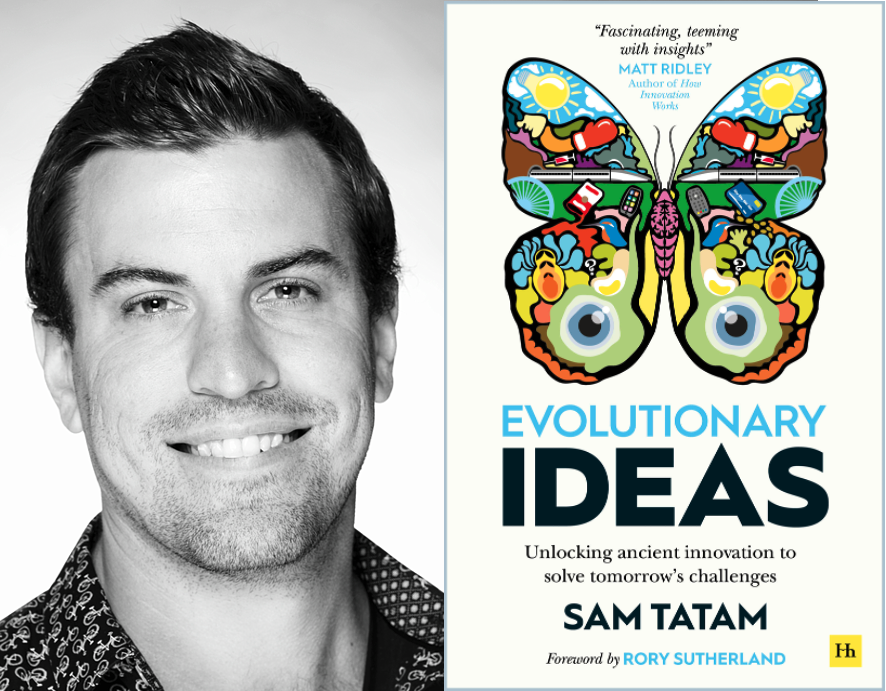
Tatam is an organizational behaviorist and global head of behavioral science at Ogilvy & Mather Consulting (UK).
I think this is a great, underrated book. It was published a year ago, but so far there is no Chinese version, not even a Douban page …… But there is good stuff in this book. This book is about how to use behavioral science to do things - specifically, how to use various sets of evolutionary psychology to solve business problems, such as using advertising to influence consumer behavior.
Tatum says that psychology has advanced much faster in the last thirty years than physics or economics; we’ve added more to our understanding of the human brain in the last thirty years than in the last three thousand years. Like I wrote about the science of evolutionary psychology a long time ago, but the feeling I got from reading this book was * Evolutionary psychology is now not just a discipline, it’s an engineering project: you can readily apply it to all kinds of designs. *
The ‘evolutionary ideas’ in the book’s title are good ideas that have evolved, i.e., routines for fiddling with the mind.
✵
Tatum wrote his book with high intentions, so let’s leave evolutionary psychology out of this talk, and let’s consider the bigger question:Is innovation learnable?
Or is there a formula for innovation? Are there a finite or infinite number of ways to innovate?
People generally have the impression that innovation is a whim brought about by a stroke of genius, a heavenly inspiration. Especially since our column just talked about Wolfram’s ‘computational irreducibility’, we know that there are theoretically an infinite number of creative ideas in the world. Even if you collect all the good ideas you can find together and compile an Inventor’s Handbook, there’s bound to be someone, in the future, who comes up with a great idea that’s not in your copy of the handbook. That’s no problem.
But have you ever thought that if we don’t think about computers and other out-of-the-box stuff, and we deal with “everyday” innovations, like product design or something, that the good ideas that are out there are pretty much enough? If you have a keen enough eye, a new product is just a recombination of existing ideas in your eyes.
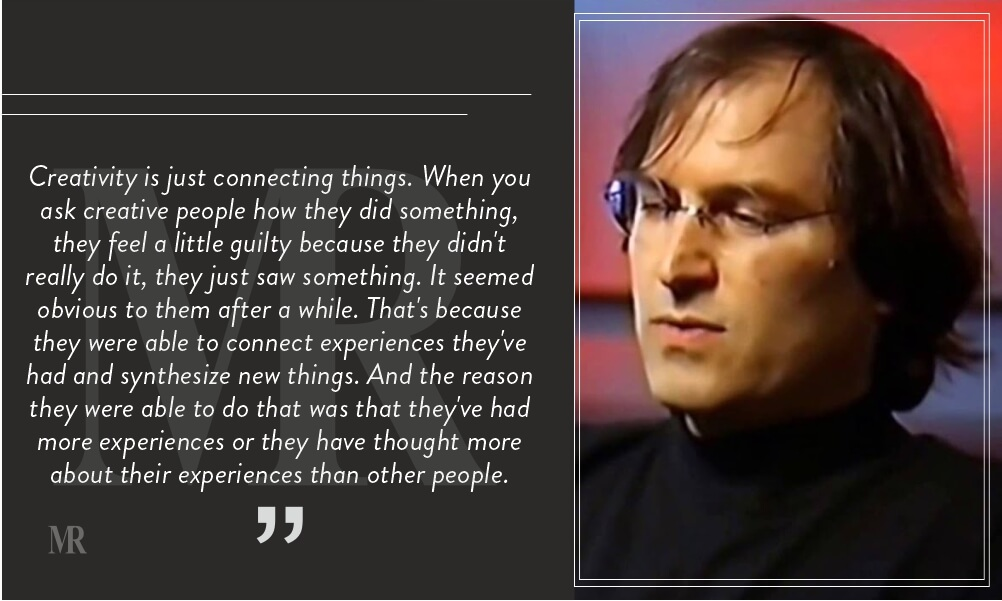
Steve Jobs famously said, “Creativity is about connecting things. When you ask creative people how they do it, they feel a little guilty because they don’t really create, they just see what …… they are able to connect their experiences and synthesize them into something new.”
That’s why there’s a saying that ‘synthesis is creation’ and our columns love to say that ‘creation is the connection of ideas’ [1].
So now I’m asking, if someone really lists all the good ideas for you, and if you want to create something in the future, you just pick a few of them and combine them, is that okay?
Yes! And it’s been done for a long time. Let’s start with a story.
✵
There was once a genius inventor in the Soviet Union named Genrich Altshuller (Russian: Ге́нрих Сау́лович Альтшу́ллер, 1926-1998). This man was awarded a patent when he was in elementary school or an underwater submersible; when he was in high school he invented a carbide-fueled rocket ship. Achishul joined the Navy in his twenties and soon invented a way to be able to escape a submarine without diving equipment, which was immediately adopted by the Soviet military and classified as a military secret.
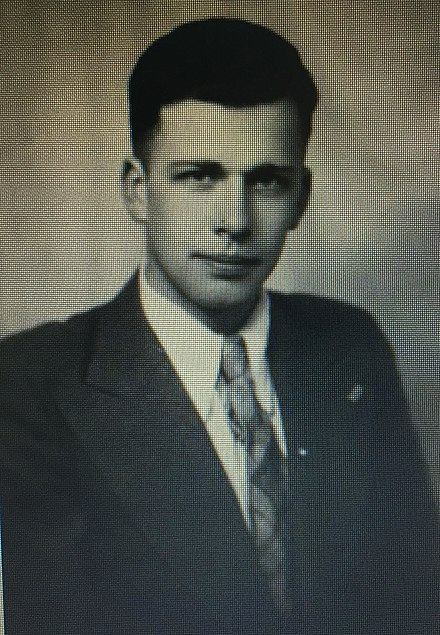
So it’s really not because the Soviets couldn’t innovate …… Archie Schuler was good at inventing on his own, but he realized that his colleagues weren’t very good at inventing. He thought to himself, “What’s so hard about that? I’ll teach you.
Archie Schuyler’s strength was that he had spent some time in the Navy’s patent office and had examined many patents. He found that while very few inventions were based on completely new ideas, the vast majority of patents used the same solutions over and over again, simply migrating from one field to another. Achschuler had a grand plan: simply make a list of all the innovation routines and form a unified system!
This system is called “TRIZ (from Russian: теории решения изобретательских задач)”, which means “Theory of Inventor-type Task Solving”, and is sometimes translated into Chinese as “萃思” (萃思), which means “to extract and think”.
Achschuler was confident that with this system he could teach engineers how to invent. He even wrote a letter to Stalin, saying that the Navy’s current R&D was so inefficient and chaotic that my method should be promoted.
This kind of over-the-top complaining caused resentment in the Navy hierarchy, just as Stalin was engaged in political purges all day long, and Achschuler was put on the list. He was arrested in 1949, subjected to continuous torture and interrogation, and sentenced to 25 years in prison …… Good thing Stalin died in 1953 and Achschuler was released in 1954.
Since then, TRIZ has been popularized in the Soviet Union.
✵
TRIZ summarizes all invention ideas into 40 principles that you can just call on directly.
For example, Principle No. 11 is called “beforehand cushioning”, which means that you should leave a cushion in advance in order to cope with possible problems. For example, if you want to design an airliner, you should prepare life jackets under the passengers’ seats and have spare oxygen overhead; if you want to design a parachute, you should have a spare parachute to prevent the main parachute from failing to open; if you want to design a Formula One track, you should put some tires on the edge to prevent the car from running off the track and getting hurt. ……
With these principles in hand, you’ll have all kinds of ideas for inventing something new, so you won’t be groping around in the dark on your own.
The general logic of the TRIZ method is threefold-
First, the same problems and solutions recur in different industries and disciplines;
- Secondly, patterns of technological evolution are also recurrent in different industries and disciplines
*Third, innovative approaches in one field can be borrowed from other fields. *
What is even more impressive is that the TRIZ system includes a ‘Contradiction Matrix’. In fact, many inventions are trade-offs of various contradictions. For example, for a bullet-proof vest, you want it to be strong, but you don’t want it to be heavy; for a parachute, you want it to be big after unfolding, but you also want it to be very small when folded up. …… How can you satisfy all these wants and needs at the same time? You just have to substitute the requirements into TRIZ’s matrix, which finds the intersection of those requirements and gives you a few principles as possible solution ideas.
This is no longer just a “mind trick” to inspire, this is a manual to get started, this is the art of war, this is the game of chess, this is the secret sauce. This is the secret of the art of war and chess. Technological invention, no longer need to rely on the head to think.
The Soviet Union did a good job of keeping it a secret, and it was only after the end of the Cold War, when immigrants from the Soviet Union brought TRIZ to other countries, that the Western world realized that it was still being done, and in 1995 a TRIZ Institute was established in Boston, USA.
To this day, you can still find many new books introducing TRIZ theory. It is sometimes called the ‘innovation algorithm’.
The truth of this is that there are already a lot of good ideas readily available in the world, maybe in some field right next door …… you just have to take them and use them.
✵
Of course TRIZ is mainly an engineering design thing and can’t include good ideas from all fields. There are some fields that are far from engineering design, such as psychology, that should get their own TRIZ system. The spirit of this is that good ideas are enumerable and can be used across boundaries.
In fact, nature has always been like this. There is a particularly interesting phenomenon called Convergent Evolution, also known as Convergent Evolution [2], which means that different types of organisms have found the same solution in their own independent evolutionary processes.
For example, birds, bats, and many insects have solved the problem of flight by relying on “wings”, is this due to genetics? No. The common ancestor of these three creatures in the distant past did not have wings, they invented them independently of each other. So it seems that there are not a hundred solutions in the world to make a creature fly - wings are the best solution, so much so that everyone who tries and tries and tries ends up using that.
Another example is that the cactus, as a plant, is covered with thorns, and the thorns are one of its defense mechanisms; and the porcupine, as an animal, also uses thorns as a defense mechanism - are they imitations of each other? No. The long thorns are a universal solution, and they each discovered it independently.
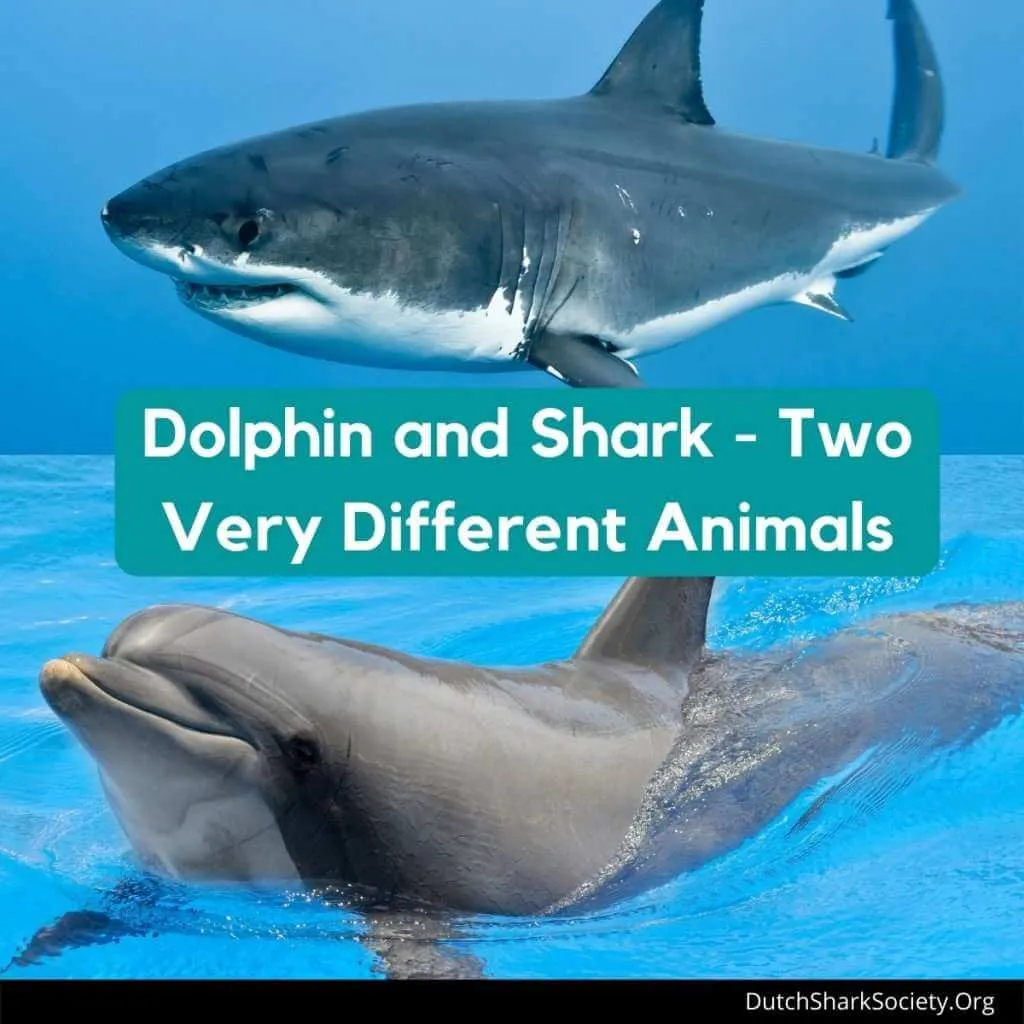
Then again, dolphins are mammals that breathe with their lungs, and sharks are a type of fish that breathe with their gills, and they are as distantly related on the evolutionary tree as racehorses and seahorses …… Yet dolphins and sharks have a high degree of similarity: they both have streamlined bodies, they both have dorsal fins and flippers, and they both are able to move quickly.
The most famous example is the eye. The eyes of humans are highly similar to those of octopuses, and the common ancient ancestor of humans and octopuses had no eyes. The solution, the eye, is something we discovered independently on each of the two paths.
There are all sorts of organisms, but convergent evolution suggests that the biological world has a fairly limited number of solutions, and that’s all that’s most popular. You see how this is similar to technological inventions, because there are only a few good solutions, and new major inventions are often made by several inventors at the same time ……
So in that case, why don’t we give a list of all the good ideas in biology as well to form a system for easy synthesis?
This is the roadmap of bionics.
✵
Tatum tells a very interesting example. In the late 1980s, Japan’s development of the Shinkansen train ran into a big problem with noise. When the train is going particularly fast, the pantograph on the roof cuts through the air and produces a very strong noise; furthermore, when the train enters a tunnel it compresses the air to produce a sonic boom, which is also very noisy. So what about the noise nuisance when you run this high-speed train?
In 1990, Japanese engineers were determined to learn from bird experts …… As a result, they learned the way from three kinds of birds.
One is the owl. Owls fly almost no sound, why? Because owls have tiny serrated feathers that create tiny turbulences in the air, and these turbulences greatly reduce the noise [3].
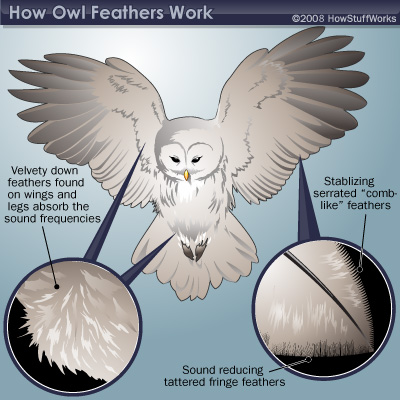
So the Japanese engineers designed a lot of tiny serrations on the train pantographs as well, and it really reduced the noise considerably.
Furthermore, there is a kind of Adélie penguin in Antarctica, which can swim at a very high speed, why? Because its body is a spindle shape.
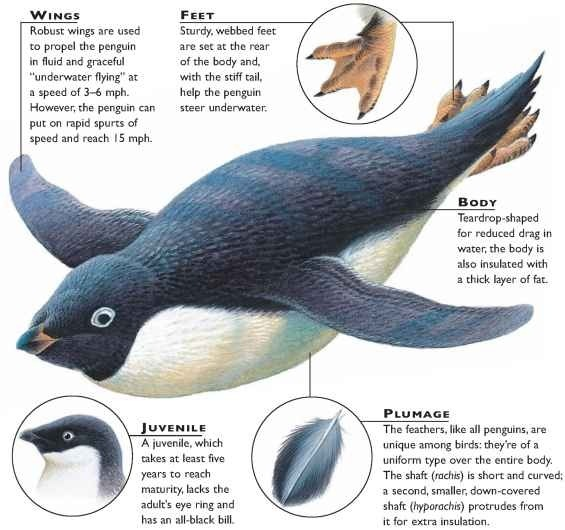
Engineers took a page from this and shaped the pantograph in the shape of a spindle and found that they were able to reduce wind resistance while further reducing noise.
So how do you reduce the noise when going into a tunnel? Engineers drew on the beak of the kingfisher. The kingfisher’s ability to plunge into the water at great speed with little or no splash is due to its exceptionally long beak, which is pointed at the front and then streamlined and gradually increases in size. ……
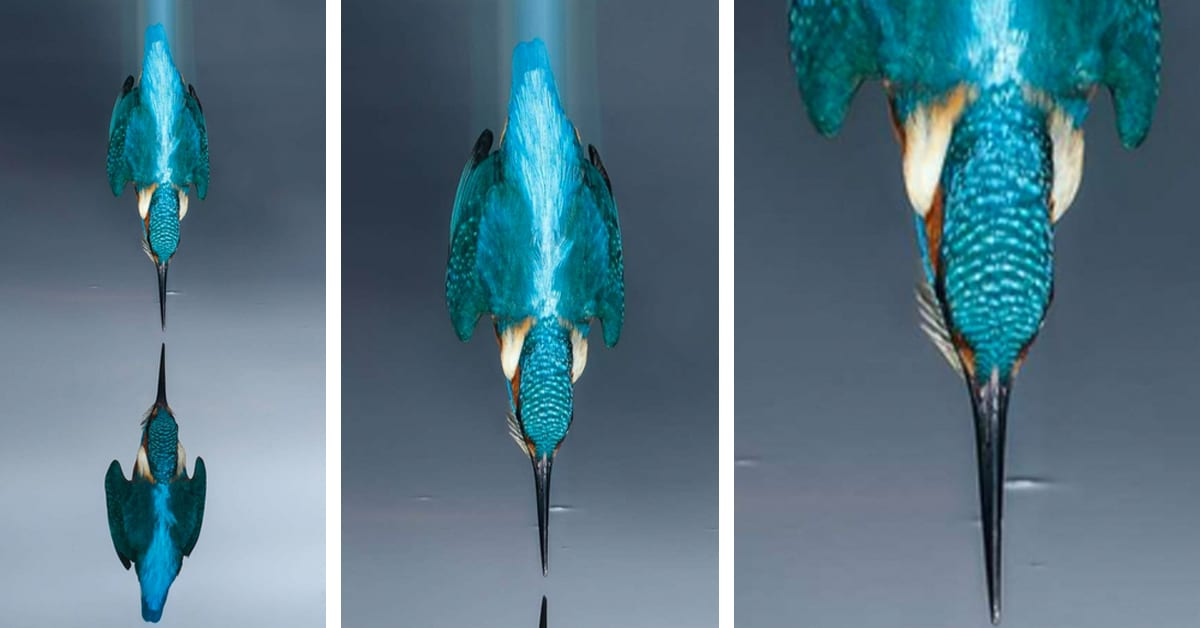
This is exactly what the so-called ‘bullet’ train front looks like.
In 1997, Japan’s 300-kilometer-per-hour Shinkansen was put into service. This knowledge borrowed from birds not only greatly reduces noise, but also saves 15% of electricity. And later, when China’s high-speed railroad introduced Japanese technology, it didn’t have to learn directly from birds ……
✵
The truth of this lies in the fact that after billions of years of evolution by nature, every living creature now alive on earth is a success story. They all have something to learn from us, and they are all unbelievably brilliant solutions. This is one of the major reasons why biodiversity must be preserved, you don’t know what other species we can learn from in the future.
And the theme of Tatum’s book is that the human brain, too, is full of all kinds of great ideas that have evolved. We’ll talk about that next time.
Annotation.
[1] Elite Day Class, Season 2, Scaffolding of Creation
[2] Elite Daily Lessons Season 4, Why Society Has to Be the Way It Is
[3] Speaking of turbulence, you may remember we talked earlier about how golf balls have lots of little dimples on the surface, also to create turbulence and reduce air resistance. Prime suspect 2: turbulence and butterflies
Get to the point
The overall logic of the TRIZ method is threefold-
First, the same problems and solutions recur in different industries and disciplines;
Second, patterns of technological evolution recur in different industries and disciplines;
Third, innovative approaches in one field can be borrowed from other fields.