Evolutionary Ideas 3: Prove Yourself

Evolutionary Thoughts 3: Prove Yourself
The subject of this talk is how to strengthen trust without changing the facts.
A product is just that, a product. How can you convince people that your product is of good quality and high grade? The traditional saying “wine is not afraid of the deep alley” “see the people over time”, in this era has little significance. Now new brands and new products are emerging, you must quickly gain the trust of consumers in order to grab the market, you have to do something.
The judgment of trust is definitely a kind of fast thinking. Studies have shown that we are faced with a person, a product, a website or a company and decide whether we should trust it or not, and that judgment is made in less than 100 milliseconds. You must have used some kind of heuristic, you invoked a System 1 thinking shortcut. This means that to a great extent, trust is psychology rather than logical reasoning at work.
Striving for quick trust requires not laying out facts and reasoning, but creating a feeling.
The easiest and quickest way for us primates to build trust is through physical contact. For example, chimpanzees grooming each other and human family members petting and hugging each other are good ways to do this …… but you can’t always hug every one of your customers.
Another way is to show your status and professionalism. Studies have shown that patients are more willing to listen to a doctor’s judgment as long as he wears a stethoscope.
Another interesting phenomenon is that ‘rhyming leads to trust’. Why do lines like “An inch of time is worth an ounce of gold, an ounce of gold can’t buy you an ounce of time” make sense when you hear them? Because it rhymes. When two jingles with the same meaning, one rhymes and the other doesn’t, people unconsciously trust the one that rhymes.
You can use these tips on your own. In this session, we’ll focus on three of the most common ways that businesses are reinforcing trust these days: *Signaling, Social Identity, and Operational Transparency. *
✵
As we’ve said many times in our columns on Game Theory[1] and The Hidden Game[2], you can gain someone’s trust by sending out some “signals “. And the ideal signal has two characteristics: one is wasteful and the other is expensive.
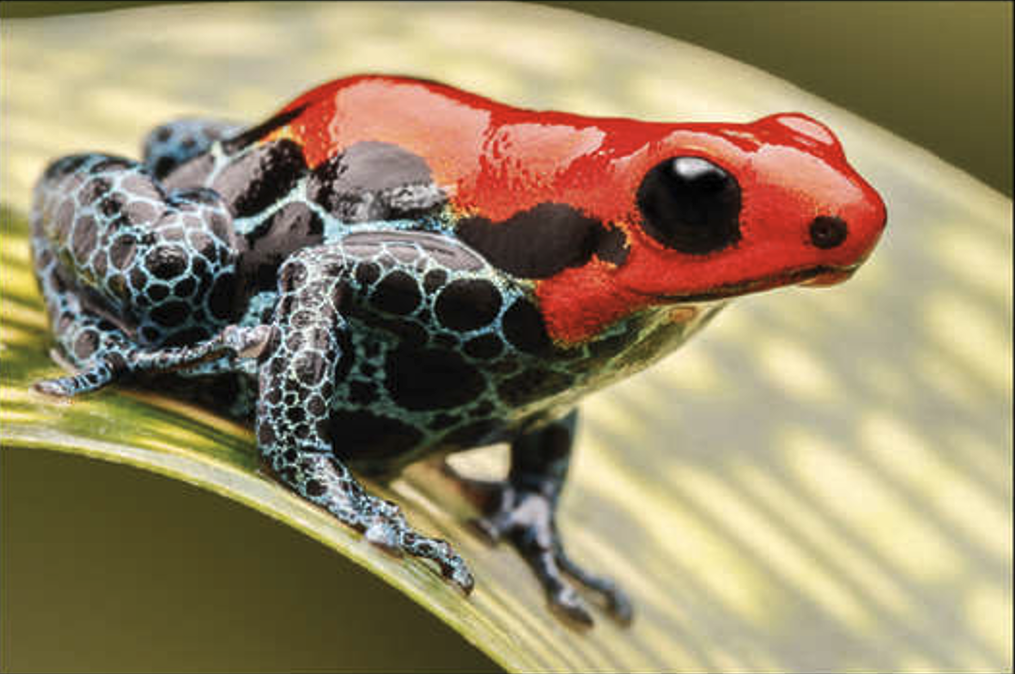
The male peacock’s tail is big and beautiful, but it actually has no practical value, but such extravagant wastefulness just proves that he is in good health and is not afraid of being cumbersome. Gazelles will make a few showy jumps in the face of predators. Poison dart frog looks very conspicuous, not only do not engage in what protective colors and the main bright red, not afraid to be seen by you, anyway, you a little bit of common sense will know that I am poisonous dare not eat me. These are all signals.
The same is true for humans. The bank’s building must be tall and grand, indicating that we are particularly rich, you can rest assured that this money deposited with me. The engagement ring must be expensive, certainly not something that can be bought every year, so as to show sincerity. High-end brands spend a lot of money on the best advertising, even if they have few users, just to build up their image.
All of the above are routine operations, probably you already know. Here I especially want to tell a story, may be slightly less appropriate, but you will not forget it after hearing it.
There’s a video game called Drakengard 2: Redemption that made over $725 million in 2018, just three days after its release. But this game was released with no fanfare, so why was it such a hit as soon as it was released? Because it had a detail that created a strong news effect.
Action-adventure games like this one are particularly concerned about image quality, and Redemption’s physics models are extremely realistic. How realistic? The two “balls”, or testicles, of the stallion in the game are clearly visible. What’s more, when the game is cold, the horse’s testicles shrink. …… gamers have been talking about this, and the media has been spreading the word.

That’s a good sign that it’s expensive enough. Even this detail, which isn’t usually talked about, is so well done, and the rest is certainly good.
A merchant’s extravagance can also be shown in the fact that he will sometimes talk you out of buying his stuff. You order food in a restaurant, the waiter said this dish you’d better not order, and expensive and not good, I recommend you to order these …… then you must be very trusting of the waiter, and along with it, the restaurant.
Another kind of expensive signal is that the company publicizes its philosophy and commitment with great fanfare and asks everyone to monitor it.
There is a supermarket chain in Europe that gives every attendant a badge with not only the attendant’s name, but also the year in which the attendant joined the supermarket.
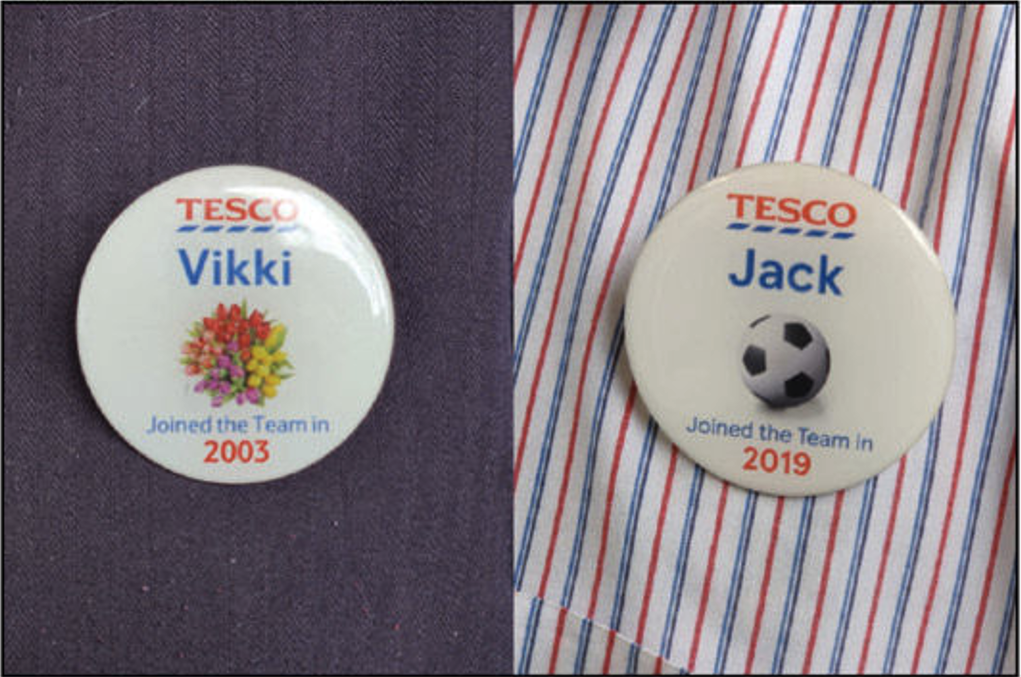
Why is this information useful? Because more years means more credibility. This waitress has been here since 2003 and hasn’t been fired for disciplinary offenses in all those years, so if she has any advice for you you can totally trust it. The expensive part of this signal is that newer waitresses will be perceived as less reliable …… but it’s a price worth paying for the store.
✵
Next say ‘social identity’. Social approval is about seeking security through numbers. If so many people approve of the item, you can trust it too.
For example, if you see a long line outside a restaurant, and someone is willing to wait an hour for a seat, then you will believe that the restaurant is pretty good [3]. Online stores are even more convenient; the number of people who like and rate the product is social approval.
The simplest manifestation of social approval is that the item is about to sell out, and that provides a sense of scarcity.
Tatum says a good way to do this. An advertisement for a personal print that you might often see on college campuses or near your apartment. A plain A4 sheet of paper with the advertisement on top, made into a row of small slips of paper underneath, each with a phone number and address. Whoever is interested in this advertisement, tear off a note and take it away.

The trick is to tear down a few notes yourself before posting the ad. The fact that others look at the fact that someone has already torn down a note means that it is really intriguing, and this will immediately increase interest.
✵
Operational transparency may be a particularly popular means of gaining trust that has emerged in the last decade. As we mentioned earlier, both Delta Pizza and BMW let you know in real time how far along you are with your order, which is operational transparency. Studies have shown that this waiting process can be exhilarating for consumers. Maybe on the one hand everyone likes to expect good things to come to their door, and on the other hand, the fact that the merchant is working hard for you will make you happy.
An older woman accidentally locked herself out of her home and hired a locksmith to unlock the door. It was agreed that the job was 50 dollars, but the master opened the lock in less than a minute, and when the aunt took a look, she only wanted to pay 20 dollars because she thought it was too easy …… She didn’t take into account that the other master practiced this craft and spent time on the road, and this kind of thinking on her part is unscientific. So can we do the opposite?
Let the consumer see the process of your work and how difficult it is for you, and they will evaluate you more highly for this work. To earn trust, you want your efforts to be seen.
For example, many restaurants have open kitchens, you order a ramen noodle, the chef does it live in front of you, and you have a sense of fulfillment as you watch someone else work so hard to do something for you.
It’s a purely psychological effect. It means that even if the job really isn’t much to look at, you have to find a way to perform it for people to see.
For example, there’s a travel booking site called kayak.com, and you search for airfare on it, and it doesn’t return all the results to you at once - it shows the search step-by-step: we’re searching for this airline right now, we’re searching for this airline next… …you see it looking up one airline for you, like it’s a lot of work, and then you like the results better.
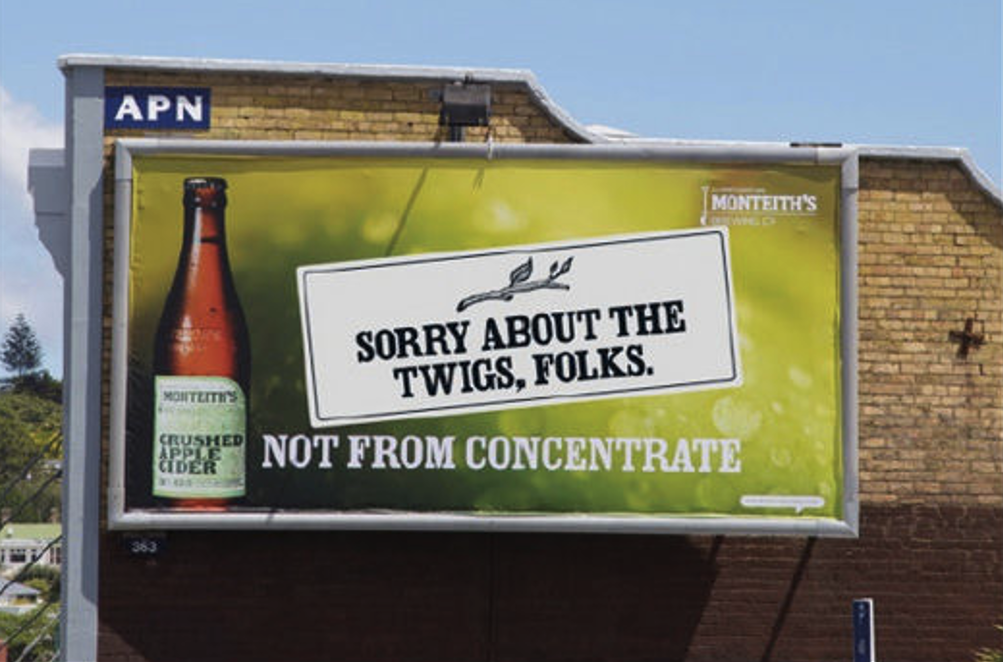
There’s a company that makes juices from apples and pears that are juiced directly into bottles to make beverages. You know that freshly squeezed juice tastes almost the same as juice from concentrate, so how do you prove that your family is freshly squeezed? Once this company had a whim, to the orchard to get some twigs, put in the juice bottle …… consumers drink juice out of the twigs, said you how this mess? The company immediately apologized publicly in the national media, saying that we in order to freshly squeezed, accidentally the twigs also squeezed into it. As a result, his family’s sales soared, and people looked at them to see that they were really squeezed ah.
And a brand that makes fresh orange juice came up with another solution: write down on every bottle of orange juice what time and minute it was squeezed.
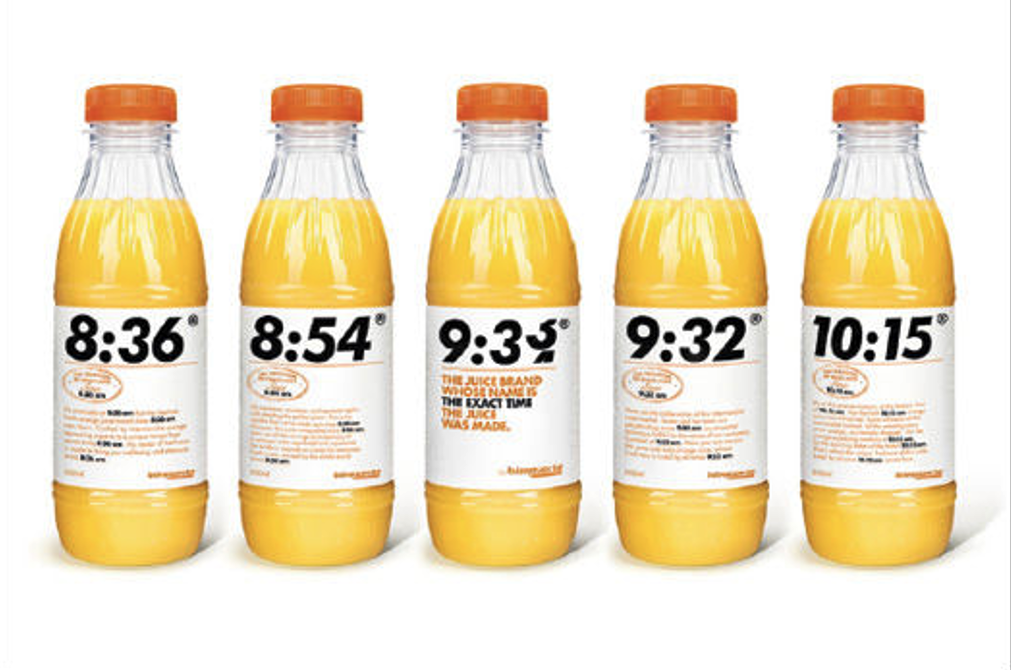
This kind of precise documentation of an action adds credibility, even if it’s not necessarily true.
In farmers’ markets in Europe and the United States, the prices of local products are usually significantly higher than those of standardized products shipped from far away by supermarkets, because the people want to support local farmers and feel that products directly from the farms are healthier, a bit like the Chinese who promote “earth eggs”. How do you prove that your carrots are local? The answer is to intentionally leave them unwashed, so that they are covered in dirt, giving the impression that they have just been pulled out of the ground.
City dwellers in this day and age are generally averse to the industrialization and automation of food, so how do you give them a handmade feel? A burger joint in the US puts a big pile of potatoes in front of its entrance to prove that it really does make its fries from scratch. A restaurant in Paris that makes pasta makes a point of stacking bags of flour at the door to prove that my pasta is made on site. One company that made buttermilk yogurt labeled each jar with the name of the cow it came from.
This reminds me of someone who, in order to prove that the goat’s milk he sells is fresh, simply takes the goats directly to the fairgrounds and milks them on-site …… The reality of this is that people really like transparency in their operations.
✵
That even includes feigned effort. You like to see vendors laboring hard, but sometimes there’s really nothing to show, so they have to deliberately put on a show for you, and you’ll have increased trust for it - it’s called the *”labour illusion” (labour illusion). *
For example, if you call customer service, the person answering the phone is an AI, and you know that the person answering the phone is an AI, but if the phone plays you a typing sound, creating a feeling that the other party is talking to you while diligently typing and recording your information, your trust will also increase.
Your trust is also greatly enhanced when you withdraw money from an ATM and an animation of counting money is played to you on the screen while you wait for the money to come out.
One of the most interesting examples is toothpaste. You’ve probably used that colored toothpaste with the red, blue, and white stripes that look great when you squeeze it out. The merchant might be able to say that the three stripes represent the three functions of the toothpaste, which keep your teeth strong, your breath fresh and your gums healthy ……

Actually those features have nothing to do with color. It’s made to be colored purely for your eyes. There’s a subtlety here: colored toothpaste is definitely harder to make than just white toothpaste, and the difficulty reflects the manufacturer’s effort, and you like the manufacturer’s effort.
Why does a dishcloth have to have such a complicated structure? Why does a throat lozenge have to have a red heart in the center? They reflect harder labor.
The fact that they’re all automated on an assembly line doesn’t really add anything to the labor. The real effort of the manufacturer is psychological.
✵
- In this talk we talked about three ways to increase trust, signaling, social recognition, and operational transparency, with the focus presumably on giving a sense of labor. * These approaches are simple to say, and they may actually work for you on the receiving end - but on the supply side, these don’t quite fit our intuition.
Our day-to-day thinking is that if I work diligently to get the job done, you should experience my labor in the product. If you don’t notice, that’s your problem, not mine ……
And the reality is that trust is something you need to work hard to create. Modern society demands proactivity, but outright self-aggrandizement is inadvisable - you don’t want to brag, and others resent you bragging - you need to utilize the cognitive patterns inherent in the human brain. *
NOTES
[1] Game Theory 12: How to Screen for Signals
[2] The Hidden Game 3: The Four Levels of Flair
[3] Of course we just talked about Kevin Kelly’s quote “Don’t wait in line for something famous. It’s rarely worth the wait.” But Kelly was talking about the question of whether it’s worth your time, whereas here it’s a question of trust: the fact that so many people are queuing means that the restaurant must not be too bad.
Underline the point
- three ways to increase trust: signaling, social recognition, and operational transparency, with the focus presumably on giving a sense of labor.
- Trust is something you need to work hard to create. Modern society demands proactivity, but not self-aggrandizement; you need to leverage the cognitive patterns inherent in the human brain.