Red Capsule of Consciousness 2: The Sixth Sense

Red Capsule of Consciousness 2: The Sixth Sense
We’re talking about the big question of what’s going on with human consciousness in this feature, and we’re going to talk about it from the scientific level all the way down to the philosophical level. With big questions like these, you have to say what is the use of this new knowledge of yours, and that’s a fallacy: these questions are not a means but an end, and we have to live in search of knowledge, and we don’t accept to live in a state of confusion and uncertainty.
But then again, this new knowledge does work, and it may work well. This talk has a couple of new ways of using the body to think.
✵
Let’s start with a little experiment. You find a chair and sit down comfortably, put your hands on the arms of the chair or on your thighs, and keep your mind and body calm. Choose a fixed time interval, such as a minute, count your heartbeat. Note that you don’t want to take your pulse with your hand, you want to feel the beat of your heart directly with your body. Count the total number of times your heart beats in that minute.
This is not easy because the human heartbeat is not absolutely smooth, sometimes the intervals are longer, sometimes shorter. In scientific experiments, subjects are simultaneously hooked up to an electrocardiogram - which smartwatches now have - which records your actual heartbeat. The number of heartbeats you perceive is compared to the number recorded by the EKG, and the smaller the difference between these two numbers, the better your heartbeat perception.
Only about 1/4 of the subjects perceived a number that was less than 20% different from the ECG; while 1/4 had a difference of more than 50% [1].
This experiment measures a person’s perception of their own internal signals, which is called “interoception”. We count heartbeats because they are the easiest to measure, but interoception also includes the perception of any bodily changes in the muscles, skin, joints, internal organs, etc. It also includes the usual sensations of being thirsty, cold, hot, hungry, etc., and refers to the generalization of how well you can or can’t hear the signals your body sends out.
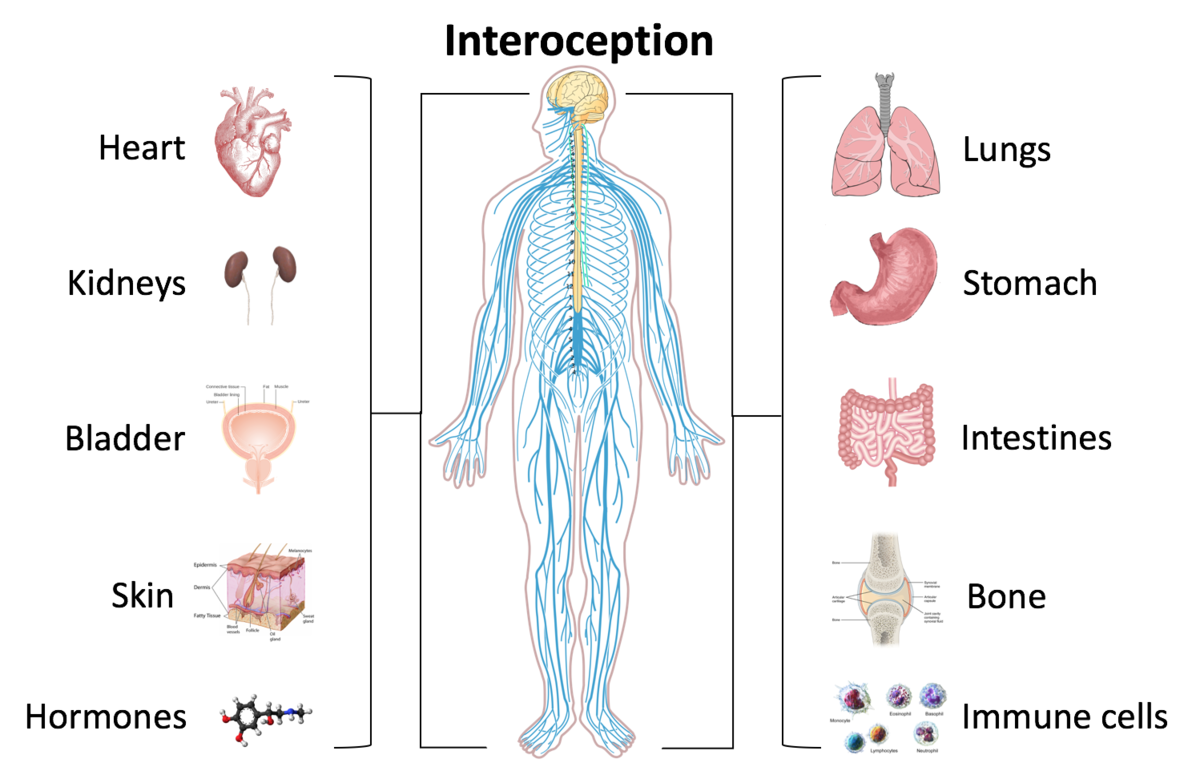
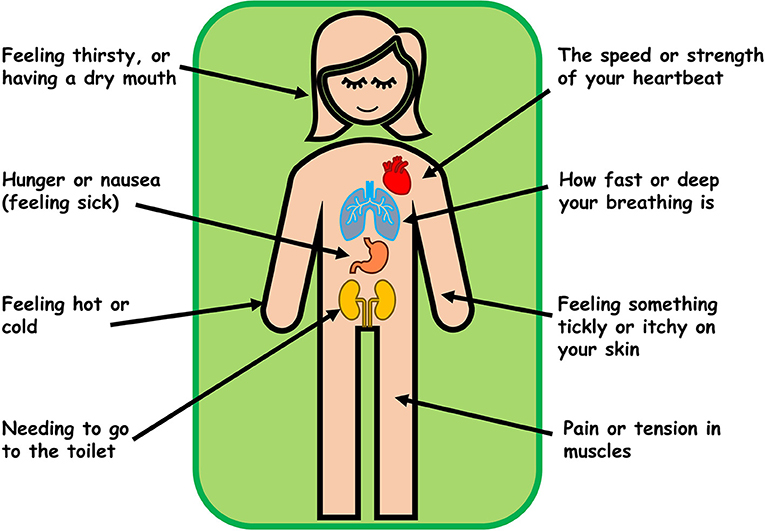
The concept of inner sense has only been popularized in the academic world in the past decade or so, and has already been referred to by some scholars as the ‘sixth sense’. That is, in addition to sight, hearing, touch, smell and taste, your actual sixth sense. Like the other five senses, there are strong and weak internal senses. We might as well call your internal sensory ability “internal sensibility“.
Nowadays, many scholars use the heartbeat counting experiment to measure people’s inner sense power. If you can count it very accurately, you have a strong inner sense, otherwise you have a weak inner sense. What does the strength of inner sense mean?
The sixth sense, as the common people say, generally refers to a kind of intuition, an ability to foresee things. For example, a girl says, “My sixth sense tells me this thing is dangerous ……”
The inner sense is precisely a sixth sense in this sense.
- People with a strong inner sense can make better intuitive judgments. *
✵
There was a study in 2010 [2] that went like this. Four decks of cards are placed in front of you, and each round you choose one of the decks and draw one card from it. If you draw a red card, you win; if you draw black, you lose. The secret of the game is that the “density” of red cards in the four decks is not the same; two of the decks have more red. After a number of rounds, depending on the frequency of the cards that have appeared, you may or may not be able to sense that those two cards are different.
So who could feel it? The researchers first measured each subject’s internal sense power by counting heartbeats before playing the cards. It turned out that people with a high level of internal sense either performed better or worse than average. Those in the middle of the performance level were those with weak inner sense.
Why is this? The researchers hypothesized that perhaps the person with a strong inner sense already had a strong intuition about which two cards were “not quite right”. He has a strong intuition, but he can’t tell whether that intuition is positive or negative. Perhaps he feels that since the deck has produced so much red, there must be a lot of red left; or perhaps he feels that since the deck has produced so much red, there must be very little red left - so he is either very right or very wrong. The person with weak inner sense, on the other hand, just continues to draw cards at random.
In other words, these people with strong inner sense are sensitive to the signal, they’re just not very good at interpreting that signal yet. This could be because the experiment was done so hastily, and the subjects were not rehearsed enough to familiarize themselves with the rules.
So do you think that if someone played this game of guessing with their intuition on a regular basis, would people with strong internal senses do better? This leads to a study that seems pretty amazing to me.
In 2016, some researchers, mainly from the University of Cambridge, did a study [3] with financial traders working on the London Stock Exchange floor, also measuring their inner sense by counting heartbeats. It was found that the traders’ inner sense was stronger than that of the general population as a control group; also, among the group of traders, the stronger the inner sense, the stronger the profitability of the traders. More interestingly, the longer the traders had been in the financial industry, the stronger their inner sense was.
It’s not clear whether it’s because of strong intuition that you can stay in the trading business longer, or whether it’s because you’ve been in the business longer that you’ve improved your intuition. But if you believe that trading requires intuition, then perhaps the key lies in this inner sense.
✵
How to make sense of these studies? The first possibility that comes to my mind is that a strong internal sense indicates that the person has a cool head and is able to eliminate distractions: since he can count his heartbeats, he may also be better at processing external information, and it’s just a matter of the brain’s cognitive ability. But that’s not what the researchers say.
The Cambridge study [3], for example, found that the ability to count heartbeats is only one part of a trader’s intuition - the other part is the ability of the heartbeat itself. The researchers looked at several physical indicators and found that the only key indicator of a trader’s success was his “heart rate variability”. It is the heart rate variability that is really making the judgment, the internal sense is just the ability to perceive the heart rate variability, and the brain’s perception comes later.
This means that before your brain realizes what’s going on, your body already knows, as reflected in the heart rate variability. Successful traders are very good at listening to their “heart”.
This is the word that describes intuition in English: gut feelings, visceral feelings. It is the body that first feels, then goes through the internal senses, and then the information reaches the brain.
✵
Visceral sensibility is also the ability to perceive one’s own emotions. In that previous 2010 study [2], it was also found that the stronger the inner sense, the stronger the correlation between heartbeat changes and their descriptions of their emotions. Our emotions are first and foremost physical sensations, and the brain simply interprets them as emotions.
Our column used to talk about Nick Chater’s Thinking is Flat, and one of the studies said [4] Let’s say you’ve just walked across a rickety suspension bridge that causes your heart to race. There’s a beautiful woman at this end of the drawbridge asking you to fill out a form, and you’ve only been with her for a few minutes. But you feel like you’re falling in love with her - the control subjects who walked across a sturdy, non-shaky bridge that didn’t make their hearts race didn’t have a love reaction.
**It’s not love that causes heartbeats, it’s heartbeats that cause love.**So when people describe love as a “heartbeat”, it does make sense, it’s really the heart that takes the lead. The body comes first, the brain comes second. The body is influencing the consciousness.
We could cite many similar studies [5] –
Make a smiling gesture on your face and you will really feel happy;
Experiments in which Botox was injected into your brow muscles to create a prolonged frown, and you spent more time reading an article with sad and angry sentences in it;
Holding a hot drink in your hand, the warmth of your hand will make your brain feel emotionally warm and you will feel that the people around you are more friendly and accommodating to you;
And the cold, on the other hand, will make you feel lonelier ……
In this way, * to influence a person’s emotions, you can start by influencing the body. *
But those are nothing. What’s even more amazing is that the body’s influence on consciousness can also have a productive effect.
You may have seen people doing math problems and instead of writing with a pen on a piece of paper, they gesture with their hands while thinking, which is actually a good habit. Indeed studies have shown that when teaching math to a child, he understands faster and remembers longer if he is allowed to gesture while learning [6].
Let’s talk about two productivity techniques [5].
✵
If you want to inspire creativity, it’s best to start by relaxing your body. Maybe half lying on the couch or bed, smoking a cigarette or drinking a cup of coffee will do, the more comfortable you are the better.
Research [7] shows that people spend 10% less time solving problems lying down than standing up. So what if you can’t lie down at work? An easy way to do this is to sit down, with your left arm stretched out in front of you on your knee, and your right arm bent over your chin, imitating Rodin’s sculpture The Meditator.
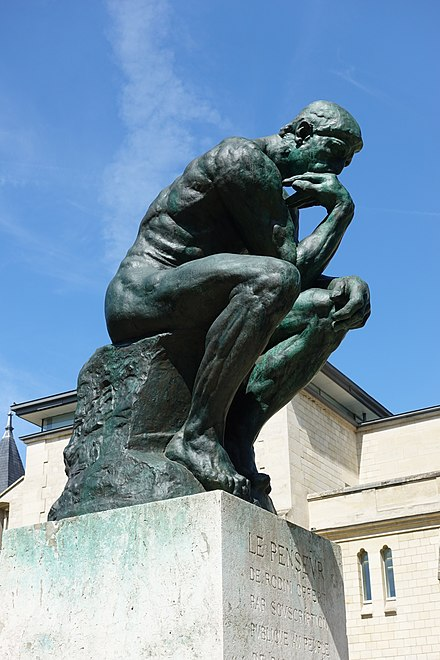
Another easiest way is to turn your two eyeballs left and right, which is said to promote lateral thinking. That’s why the old saying, “A turn of the eyeballs makes a plan come to mind” makes sense ……
And if you want to improve your willpower and concentration, then you can’t let your body relax, you need to put your body in an uncomfortable state.
For example, if you have a report to write right now, and you need to spend three hours concentrating on it, but you keep procrastinating and don’t want to write it, and as soon as you turn on your computer you want to read the news, what can you do? The easiest way is to …… hold your urine.
Drink more water and find that feeling of wanting to go to the bathroom. But you don’t go, turn on your computer and get to work, telling yourself to get your work done before you go.
Experiments have been done specifically [8]. The subjects were divided into two groups, one group drank only a few sips of water, and the other group drank a few glasses of water, and after a period of time their willpower was examined. It was found that those subjects who drank a few glasses of water and were tempted to go to the bathroom had significantly more willpower.
It could be that in order to overcome the need to go to the toilet, your body has mobilized your willpower; and once the willpower is out, you can do something else in the meantime.
So wouldn’t you say that holding it in is more than worth it - yes, so there are other ways to do it, as long as it makes your body feel a little uncomfortable. Standing on one leg might be the way to go, or maybe you could actually try hanging your head from a beam …… And as we now understand it, the function of that classic scene is not to remind you not to go to sleep, but to mobilize your willpower.
✵
This talk we talked about how the body may be able to know things before the brain does. Maybe your five senses do some super fast calculations in the nervous system of your entire body after being exposed to outside information, before returning the results to the brain in some sort of subconscious. If your internal senses are strong enough, you can turn this subconscious into conscious.
Our traditional understanding is that the brain decides what to do on its own, based directly on the external information, and then directs the body to do it; nowadays, it seems to be more like the body is processing the information before the brain, and the body is telling the brain what’s going on right now.
Utilizing this principle, * To influence the brain, one can first influence the body - or at least one could say that the body is a shortcut to influencing the brain. * This seems to be the reason then that the ancients sought to improve their self-cultivation by looking inward, engaging in “internal observation,” and emphasizing attention to one’s breathing and so forth.
We can at least say that the body is strongly involved in the consciousness of the brain.
Next we’ll take this conclusion a step further and introduce a newer, more radical theory: body signals are not just involved in consciousness: body signals are consciousness.
Annotation
[1] Tsakiris Manos, Jiménez Ana Tajadura and Costantini Marcello (2011), Just a heartbeat away from one’s body: interoceptive sensitivity predicts the malleability of body-representations, Proc. R. Soc. B.278 2470-2476.
[2] Dunn BD, Galton HC, Morgan R, Evans D, Oliver C, Meyer M, Cusack R, Lawrence AD, Dalgleish T. Listening to your heart. how interoception shapes emotion experience and intuitive decision making. Psychol Sci. 2010 Dec; 21(12):1835-44.
[3] Kandasamy, N., Garfinkel, S., Page, L. et al. Interoceptive Ability Predicts Survival on a London Trading Floor. Sci Rep 6, 32986 (2016).
[4] Elite Day Class, Season 4, Thinking is Flat (above)
[5] David Robson, Your clever body: thinking from head to toe, NewScientist, 12 October 2011.
[6] Goldin-Meadow S. When gesture does and does not promote learning. Lang Cogn. 2010 May 1;2(1):1-19.
[7] Darren M. Lipnicki, Don G. Byrne, Thinking on your back: Solving anagrams faster when supine than when standing.
Cognitive Brain Research, Volume 24, Issue 3, 2005, Pages 719-722.
[8] Tuk, M. A., Trampe, D., & Warlop, L. (2011). Inhibitory Spillover: Increased Urination Urgency Facilitates Impulse Control in Unrelated Domains. Psychological Science, 22(5), 627 -633.
Highlights
- The body may be able to know things before the brain. It seems to be that the body is processing information before the brain, and the body tells the brain what is going on right now.
- to influence the brain, you can influence the body first. Or at least, the body is a shortcut to influence the brain.
- to stimulate creativity, it’s best to relax the body first; to improve willpower and concentration, put the body in an uncomfortable state.