Sam Altman's Systemic Ambitions (below)

Sam Altman’s Systemic Ambition (below)
Back in 2009, Paul Graham wrote in an article [1] that his two favorite people to quote when advising startups were Steve Jobs and Sam Altman. For design questions, he said, I’d ask, “What would Steve Jobs do?” For strategy and ambition questions, I’d ask, “What would Sam do?”
Graham didn’t necessarily read the Romance of the Three Kingdoms, but his syntax was clearly “Ask Zhang Zhao if you’re unsure about internal affairs, ask Zhou Yu if you’re unsure about external affairs. Sam Altman was 24 years old that year, and Graham was 20 years older than him.

That’s why I feel that if you want to do something great, the right way to do it is for the older people to learn from the younger people, not the younger people from the older people. Young people are not only closer to new things, but also have greater ambitions.
Of course, not all young people are like that. What is it about Altman that makes a big man like Graham take him as a teacher?
✵
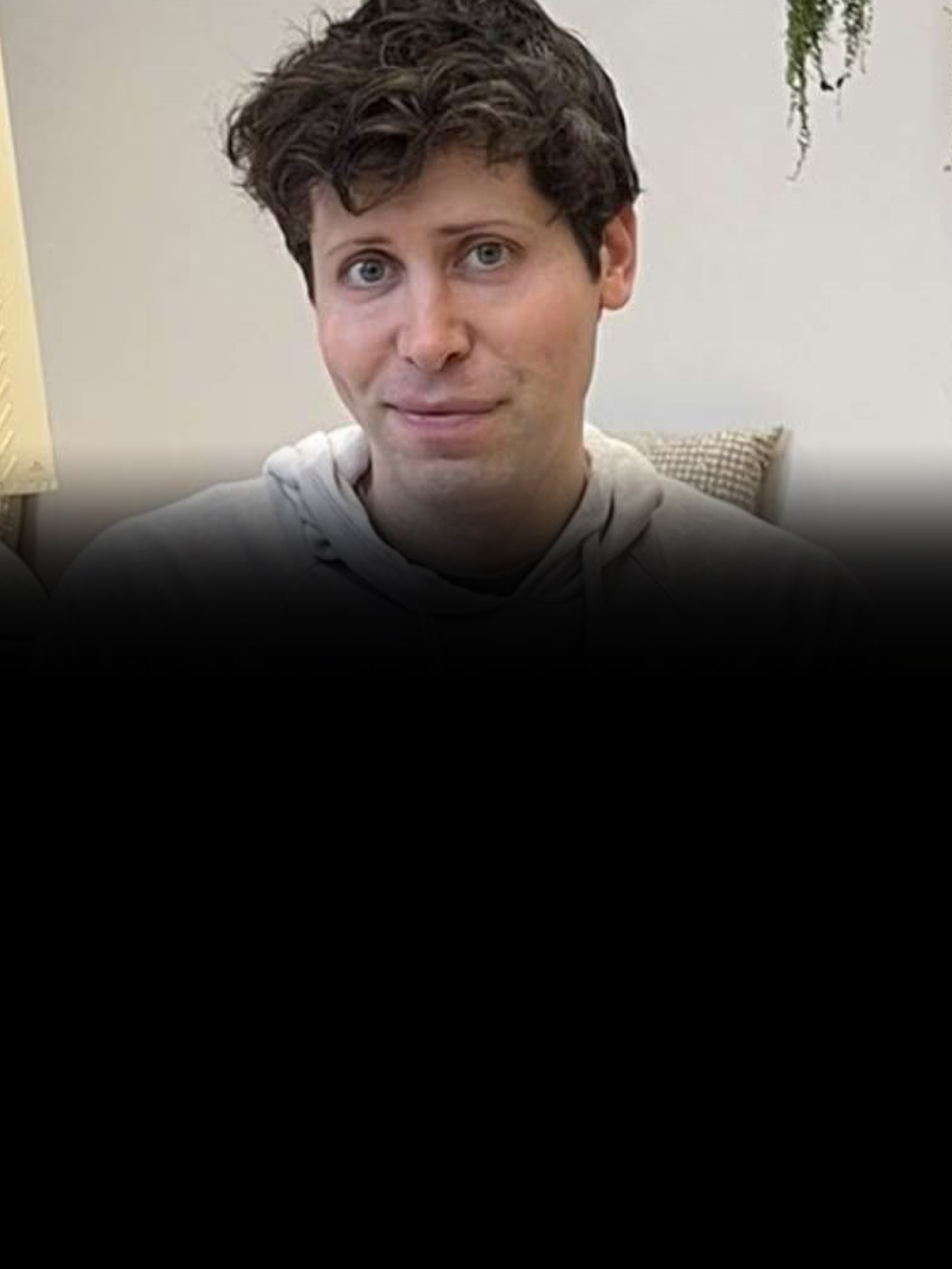
Born into a Jewish American family, Altman got his own Mac and started programming at the age of 8. In 2005, during his sophomore year in the computer science department at Stanford University, Altman started a company called Loopt, which was in the business of socializing with friends by sharing their geographic locations. Note that there were no iPhones at the time, and Altman dropped out of Stanford in order to do his best for the company.
So technically, Altman “joined the workforce” when he was about 20 years old, and has 18 years of real-world entrepreneurial experience under his belt. In contrast, if you honestly go to college, and graduate school, and read a doctorate, you may not be 30 years old have not been in contact with the real interests of gain and loss, let alone talk about what the big things …… This is called “aspirations are not as high as the year”.
Altman’s style of behavior is different from ordinary people. For example, he is very efficient. He always handles emails and meetings as fast as he can. If he is interested in what you are talking about, he will concentrate on you and listen to your speech; if he is not interested he will be very bored. His concentration even makes people wonder if he has Asperger’s syndrome - that’s the kind of weirdo who has problems with his brain but has a particularly fine grasp of certain knowledge - and Altman says he doesn’t. He also jokes that he has to practice going to the bathroom more often in order to convince people that he’s a normal person and not an AI.
Altman has a strong sense of purpose, making a list of goals every year and looking at them every few weeks to figure out how to make them all happen. He would work and work until he was so tired that he was sick in order to achieve his goals. Graham’s statement is that ‘Ultraman is very good at becoming strong’.
Ultraman is particularly interested in new technologies and ideas, and not only knows them well but uses them in his life …… For example, he will tell you that trace amounts of nuclear radiation are good for your body.
Altman’s hobbies include sports cars, flying airplanes, and …… preparing for survival in apocalyptic conditions. He spends years stockpiling guns, gold, potassium iodide, antibiotics, batteries, water, IDF gas masks, and a safe place to say he can fly over once the U.S. is caught in an apocalypse …… Perhaps we can interpret this as entrepreneurial paranoia in action.
And these are just scratching the surface.
✵
In 2019, Altman wrote a blog [2] titled just that, How To Be Successful. I suggest you read this post, which is actually Altman’s advice and life advice for entrepreneurs, combined with the experiences of the multitudes he’s reached out to.
He talks about compound interest, focus, self-confidence, and other topics that at first glance seem like success clichés, but if you think about it, there’s actually something here. What Altman said is not the general sense of personal success nor the general sense of doing business, but a kind of practice, is how to maximize your potential in thought and action.
For example, he talks about “compound interest “ and says that you should not do things that make no difference between doing them for 20 years and doing them for two years – you have to have an accumulative effect, and the more you do it, the better it gets, and the more you do it, the higher the returns get. So what is the most worthwhile accumulation, can bring you the biggest business competitive advantage? Altman says it’s your long-term thinking about how different systems in the world work together.
This is probably what makes Altman most different from the average entrepreneur. He likes to think, he’s willing to put a lot of effort into figuring something out, and he sees this as the biggest competitive advantage. This is why Altman is known as the Yoda of entrepreneurs, and why he’s always ahead of the crowd’s perception when he talks about things like AGI.
For example, everyone talks about self-confidence, and Altman talks about how the key to “self-confidence “ is that you have to get to the point where you “start with the end in mind”: you have to be very confident that you can build rockets in order to start building rockets for real today. But this confidence can’t be blind, it has to be based on reality: what do you do when everyone else questions your idea? What if you are wrong? How do you listen to criticism and think independently at the same time? How do you strike a balance between the realistic and the surreal? That’s the point of the practice.
When Altman talks about “concentration “, he’s not talking about focusing your attention or not getting distracted, he’s talking about specializing in the most important things. The vast majority of people just bury their heads in the sand; Ultraman asks you to spend a lot of time thinking about what’s most important to you - and then overwhelmingly prioritize doing it well.
Another example is “self-driven “, people generally think that if I can complete my homework on my own without the control of teachers and parents, that’s called self-driven - in fact, that’s the “dutifulness” of the Big Five character. The self-drive that Altman talks about is that I do it for my own evaluation of it, because it looks good to me, not to make it look good to others.
Most people do their best to do things, but also just doing what others think is right [3]: you see everyone reveres the examination of the public you also go to the examination of the public. That’s actually a road to mediocrity: you’re not really doing anything meaningful, and you’re miscalculating the risks. You think that doing the same thing as others is low risk, and doing something different is high risk, in fact, that doesn’t make sense at all.
Altman says that after reaching a certain social status and having a certain amount of wealth, if you don’t have a drive that is purely satisfying to yourself, you’re not going to be able to reach any higher.
And “take risks “. While all entrepreneurs know that wealth is a risk, Ultraman requires you to be “able to take risks” as a quality of your own. This includes the idea that you should be able to live cheaply and flexibly for as long as possible, preferably with a backpack. This is very difficult. If you work for a big company like Google for a while, and you get paid a salary that’s high for the average person, you’ll feel comfortable and you’ll automatically plan your family’s next year according to that salary - then you’re not going to be able to start a business, and your inertia will have already taken over.
So why do you have to come out and take a risk? Because you’re going to do something amazing. According to Altman, ‘it’s actually easier to do the hard thing than the easy thing’ - because the hard thing will attract interest and people will want to help you along. The same is to come out to start a business, you have to say your company is doing gene editing, people will think it’s very interesting and will be willing to support you; you have to say I want to get another app for making notes, then no one cares.
In order to do the hard stuff, you need to be ‘absolutely competitive’. This means you can do things that others can’t imitate even if they want to, and it also means you’ll be very anti-mediocre.
Altman’s talk about ‘social networking’ is also different from what Pfeiffer’s Seven Rules of Power, which we talked about earlier in the column, says. While Pfeiffer, from the perspective of the struggle for power, emphasizes that you need to occupy key positions and become a nodal figure, Altman, from the perspective of cooperation, talks about how a good social network allows everyone to play to his or her strengths, and we all complement each other’s strengths.
To that end, the best way to build a social network is to identify a person’s true strengths and help put them in the position that best suits them-which Altman says will pay you back tenfold.
You experience this state of mind.
✵
This explains why Ultraman can have these five ambitions-
One is AI. Ultraman’s earliest involvement in AI research and the founding of OpenAI was not to have the strongest AI, but for a much larger purpose: to protect humanity from monopolies like Google that would rule over humanity by mastering AGI technology. So when you look at Altman’s recent comments, it’s never been about selling how great his company’s GPT is, but rather a call to manage the transition to AGI.

To do this, Altman also read the Madison Notes, James Madison’s notes on the U.S. Constitutional Convention. He was going to draw on the process of creating the US Constitution to work out how to run AI. his vision was to have every region of the world represented, to form a committee - and he himself would have to be on it. He said, “Why should I let those assholes decide my fate?”
**The second ambition was to use technology to change everyday life.**Through YC and his own investments, Altman has been involved in projects that include at least nuclear energy, longevity companies, cures for cancer, supersonic airliners, and more, including his investment in Helion, which claims to be able to reduce the price of electricity in the future to as little as one cent a kilowatt hour.
**The third ambition is to build a network of corporations based on YC alumni companies that can directly affect the American economy and even save the capitalist system.**The total value of this network exceeds one trillion dollars.
A fundamental assumption of capitalism is that the economy has to grow. There is growth, and especially innovation, for the capitalist system to be worthwhile. If nothing new needs to come out of the world from here on out, it’s probably okay to have it all be state-run enterprises. Altman wants to systematically promote technological innovation to drive economic growth. Like the recent Silicon Valley bank thing, which Altman also commented on.
**The fourth ambition is to create a Charter City.**Maybe in the U.S. or maybe somewhere abroad, to get a whole new type of city run by businessmen and techies that is self-governing. This city might have 100,000 acres of land with 50,000 to 100,000 inhabitants.
Altman envisions the city as a 21st-century Athens, an elite community that could test new management styles adapted to new technologies and turn over major management responsibilities to AI. for example, only self-driving cars would be allowed here, no humans would be allowed to drive. Then again, no one would be allowed to make money from real estate.
…… If the rest of the world falls into turmoil in the future, at least this city will still be a model to keep a hope for humanity. But probably because of policy reasons, this project has not started yet.
Otterman’s fifth ambition is to implement a “Universal Basic Income (UBI)“. There are actually experiments already underway, but the bigger goal is to pick a city in the United States and give each of its residents $10,000 or $20,000 a year so that they don’t have to work.
The key here is that $10,000 or $20,000 a year might be enough. Altman envisions that if fusion solves the energy problem and AI solves the labor job problem, then basic living becomes very cheap. Wouldn’t it be better to just give that money directly to everyone and have everyone live without worry, and then wouldn’t they be able to specialize in creative activities?
✵
These ambitions obviously don’t always work out, but I see them all as being of a nature that can be tried out immediately. In this sense I feel entrepreneurs are more reliable than politicians, after all, entrepreneurs can actually get money out of it, unlike politicians who just paint blueprints ……
In fact, Ultraman’s brother actually suggested that he run for president …… But what Ultraman is trying to do is not something that any president can do during his term. Perhaps the impetus for social progress should have been in entrepreneurs, not presidents. Could such ideas have come from the US Democratic and Republican parties if not from Altman?
The world’s reasoning is good, the power of action is the most valuable. A famous quote from Altman says, *”In the final analysis, your life will be judged not by how much knowledge you have, but by how much action you have taken.” *
Actually, you can learn from Ultraman. In the future, when you encounter something difficult, you think about all these things that Ultraman has done, and think about the fact that there are people like that in the world, and you might think that that thing can actually be accomplished, then it should be accomplished, so it must be accomplished.
I’m a columnist who talks on paper all day, but it may not be impossible for a Chinese Ultraman to come out from among our readers in the future. Why is this person not you?
Commentary
[1] http://www.paulgraham.com/5founders.html
[2] https://blog.samaltman.com/how-to-be-successful
[3] Elite Day Class Season 5, Stop Raising People by Training AIs
Get to the point
In the future, when you encounter something difficult, you think about all these things that Ultraman did, and think about the fact that there are people like that in the world, and you might think that that thing can actually be accomplished, then it should be accomplished, so it has to be accomplished.